The Artist
The Life
Le parcours
What follows is not the career of a man of many talents. Composing a canvas and composing a piece of music do not call for the same gesture, yet they seem to him to proceed from the same conception: the same questions of structure and tension, the same resolutions, the same way of making a whole hold together. Is this then one practice with several outputs, or several practices that resemble one another? Arnaud Quercy does not decide. He explores, changing mode, and leaves the question open — this is what he calls execution under an instituted rule.
Ce qui suit n'est pas le parcours d'un homme aux multiples talents. Composer une toile et composer un morceau ne demandent pas le même geste, mais semblent pour lui procéder de la même conception : mêmes questions de structure et de tension, mêmes résolutions, même façon de faire tenir un ensemble. Est-ce alors une seule pratique à plusieurs sorties, ou plusieurs pratiques qui se ressemblent ? Arnaud Quercy ne tranche pas. Il explore, en changeant de mode, et laisse la question ouverte — c'est ce qu'il appelle l'exécution d'une règle instituée.
Arnaud Quercy was born in Meudon in 1968, into a family where music was a domestic language before it was an art: an engineer father who played violin, guitar and piano, a grandmother who was a professional pianist, an aunt who was a cellist and a conservatory director. He began with the piano, around seven or eight, and gave it up. The clarinet took over at eleven. He listened to almost nothing but jazz — Sidney Bechet, Claude Luter, whose solos he learned by heart. That same year, on a sleepless night, his father put a pair of headphones over his ears: Charlie Parker. Bebop settled his taste for good. He would take up the saxophone five years later, after that father's death.
Arnaud Quercy naît à Meudon en 1968, dans une famille où la musique est un langage domestique avant d'être un art : un père ingénieur qui joue du violon, de la guitare et du piano, une grand-mère pianiste professionnelle, une tante violoncelliste et directrice de conservatoire. Il commence par le piano, vers sept ou huit ans, et l'abandonne. La clarinette prend la suite en sixième, à onze ans. Il n'écoute presque plus que du jazz — Sidney Bechet, Claude Luter, dont il apprend les solos par cœur. La même année, une nuit d'insomnie, son père lui pose un casque sur les oreilles : c'est Charlie Parker. Le bebop scelle ses goûts pour de bon. Il passera au saxophone cinq ans plus tard, après la mort de ce père.
He also drew, and tinkered, and made things with his hands — always, without any of it having a name. But he is colour-blind: greens and yellows run together, blues and violets too. Colour would remain a strange domain, one where you cannot trust what you see. His entire visual practice would be built from that uncertainty.
Il dessine aussi, et bricole, et fabrique de ses mains — depuis toujours, sans que cela porte de nom. Mais il est daltonien : les verts et les jaunes se confondent, les bleus et les violets aussi. La couleur restera un domaine étrange, où l'on ne peut pas se fier à ce qu'on voit. Toute sa pratique visuelle se construira depuis cette incertitude.
It was in adolescence that he laid down his first rule, without knowing it was one. Moving from clarinet to saxophone, he had to transpose at sight, in real time. To find his way, he assigned a colour to a few pitches — C is red, E yellow, A-flat blue. Finding one's bearings in sound by means of what one sees poorly: the idea can only occur to someone for whom colour is already an enigma. The device failed, as it happens. Encoding slows you down where automatism is needed. He abandoned it; the reflex remained.
C'est à l'adolescence qu'il pose sa première règle, sans savoir que c'en est une. Passant de la clarinette au saxophone, il doit transposer à vue, en temps réel. Pour s'y retrouver, il assigne une couleur à quelques hauteurs — do est rouge, mi jaune, la bémol bleu. Se repérer dans le son au moyen de ce qu'on voit mal : l'idée ne peut venir qu'à quelqu'un pour qui la couleur est déjà une énigme. Le dispositif échoue, du reste. Coder ralentit là où il faudrait de l'automatisme. Il l'abandonne ; le réflexe reste.
Years without a straight line followed. He played in the métro from the age of sixteen, and left home at nineteen. A residency at Le Tribulum, rue Saint-Denis: trio during the week, quartet at weekends. Then the club closed, and several months of drifting. He resumed his studies, funding them by playing. In 1990 he left in uniform for Berlin, ten months after the Wall came down. He expected a constraint; he found a frame. The strictest discipline opened a space for him that he had not found in freedom — and it was there, in a barracks, that he received his first two painting commissions: a mural in the non-commissioned officers' lounge, a work on a fragment of the Wall.
Suivent des années sans ligne droite. Il joue dans le métro dès seize ans, et quitte le domicile familial à dix-neuf. Une résidence au Tribulum, rue Saint-Denis : trio en semaine, quartet le week-end. Puis la fermeture du club, et plusieurs mois d'errance. Il reprend des études, qu'il finance en jouant. En 1990, il part sous l'uniforme à Berlin, dix mois après la chute du Mur. Il s'attend à une contrainte ; il y trouve un cadre. La discipline la plus stricte lui ouvre un espace qu'il n'avait pas trouvé dans la liberté — et c'est là, dans une caserne, qu'il reçoit ses deux premières commandes de peinture : une fresque dans la salle de détente des sous-officiers, une œuvre sur un fragment du Mur.
That same year, a coursework project asked him for a short film on an imposed subject: war. He made an animated one. Twelve thousand drawings, a Super 8 camera, the image and the music by his own hand, the sound entrusted to his friend Philippe Mongrolle. Nobody had asked him for twelve thousand drawings; once the rule was laid down, he executed it to the end. Screened before his year group, applauded, then buried. The film still exists, digitised, and has never been shown again.
La même année, un projet d'études lui demande un court-métrage sur un sujet imposé : la guerre. Il en fait un dessin animé. Douze mille dessins, une caméra Super 8, l'image et la musique de sa main, le son confié à son ami Philippe Mongrolle. Personne ne lui demandait douze mille dessins ; la règle une fois posée, il l'a exécutée jusqu'au bout. Projeté devant la promotion, applaudi, puis enterré. Le film existe encore, numérisé, et n'a jamais été remontré.
Nineteen years of banking followed. He joined in August 1992, as an internal auditor, in Paris — an extreme answer to the months he had spent sleeping rough, from April to September 1988: get to safety, build a professional life, a family. He found something other than safety there. In 1997, having recast his department's risk analysis method, he built the system to carry it: a database, an interface where all auditors worked as a community, the first algorithms for assisted production of the analyses, a base that learned from its own use. The department became a laboratory for the group, with Frankfurt's backing, and the system was rolled out to London, New York, Frankfurt, Tokyo, Hong Kong, Sydney, Italy, Spain. A rule conceived in Paris, executed everywhere by people who had not written it, producing results its author no longer decided. He would never stop building complex systems. Chief auditor equities in London in 1998, CIO Europe in 2001, then CIO of Global Trust & Securities — responsible for operations and IT. The journey reversed a second time when he resigned, in July 2011, to enrol at a music school.
Suivent dix-neuf ans de banque. Il y entre en août 1992, comme auditeur interne, à Paris — une réponse extrême aux mois où il avait dormi dehors, d'avril à septembre 1988 : se mettre à l'abri, construire une vie professionnelle, une famille. Il y trouve autre chose que l'abri. En 1997, ayant refondu pour son département la méthode d'analyse des risques, il construit le système qui doit la porter : une base de données, une interface où tous les auditeurs travaillent en communauté, les premiers algorithmes de production assistée des analyses, une base qui apprend de ses propres usages. Le département devient un laboratoire pour le groupe, avec l'appui de Francfort, et le système est déployé à Londres, New York, Francfort, Tokyo, Hong Kong, Sydney, en Italie, en Espagne. Une règle conçue à Paris, exécutée partout par des gens qui ne l'ont pas écrite, produisant des résultats que son auteur ne décide plus. Il ne cessera plus de construire des systèmes complexes. Chief auditor equities à Londres en 1998, CIO Europe en 2001, puis CIO de Global Trust & Securities — responsable des opérations et de l'informatique. Le trajet s'inverse une seconde fois lorsqu'il démissionne, en juillet 2011, pour s'inscrire dans une école de musique.
In between, in January 2010, alone in London, he had set himself a constraint: learn the piano and publish one piece a month, whatever state it was in. The Piano Jazz Project would run for sixty-five numbered months. This is no longer an amateur's confession documenting his progress: it is a rule executed to the end, and made public with its shortfalls. Imperfection ceases to be what one hides and becomes what one shows.
Entre les deux, en janvier 2010, seul à Londres, il s'était fixé une contrainte : apprendre le piano et publier une pièce par mois, quel qu'en soit l'état. Le Piano Jazz Project durera soixante-cinq mois numérotés. Ce n'est plus l'aveu d'un amateur qui documente ses progrès : c'est une règle exécutée jusqu'au bout, et rendue publique avec ses manques. L'imperfection cesse d'être ce qu'on cache pour devenir ce qu'on montre.
He founded a quartet with fellow students from IMEP Paris College of Music in 2016 and took a residency during their studies; he graduated cum laude in 2017, trained in composition by Chris Culpo. Painting returned in 2020, first digital, then on canvas. Clay followed, learned over two years with Isis Gondouin, at the Profils et Reliefs studio in the Butte aux Cailles.
Il fonde un quartet avec des camarades de l'IMEP Paris College of Music en 2016 et prend une résidence pendant leurs études ; il sort de l'école cum laude en 2017, formé à la composition par Chris Culpo. La peinture revient en 2020, d'abord numérique, puis sur toile. La terre suit, apprise deux années durant auprès d'Isis Gondouin, à l'atelier Profils et Reliefs de la Butte aux Cailles.
It was then that the adolescent device reappeared, inverted. He had wanted to use colour to hold music together. He now does the opposite: start from harmony, which he masters, in order to explore colour, which he perceives poorly. The rule is the same — one pitch, one colour — but it is complete: the twelve semitones, ordered by the cycle of fifths. Only the direction of reading has changed. What had failed as a crutch works as an instrument.
C'est alors que le dispositif adolescent réapparaît, retourné. Il avait voulu se servir de la couleur pour tenir la musique. Il fait désormais l'inverse : partir de l'harmonie, qu'il maîtrise, pour explorer la couleur, qu'il perçoit mal. La règle est la même — une hauteur, une couleur — mais elle est achevée : les douze demi-tons, ordonnés selon le cycle des quintes. Seul le sens de lecture a changé. Ce qui avait échoué comme béquille fonctionne comme instrument.
Is the idea first? He works as though it were — as though it preceded the material and outlived it, the medium being no more than a point of passage. What the artist produces would then not be a finished work but an emission: something that will have to pass through another mind, and will be deformed there. Roman Ingarden established as early as 1931 that a work is never complete, that it contains places of indeterminacy which the reader fills in; Umberto Eco named it the open work. Arnaud Quercy subscribes to these theses and claims no paternity over them. What he adds is an instrument: the codex, a rule he institutes between two domains — one pitch, one colour — which he executes to the end without exception, and whose divergence from the result becomes measurable. The rule is neither true nor false; nothing obliges C to be red. It is laid down, and the act of laying it down suffices to establish it. He calls this way of working ideamorphism.
L'idée est-elle première ? Il travaille comme si elle l'était — comme si elle précédait le matériau et lui survivait, le médium n'étant qu'un point de passage. Ce que produit l'artiste ne serait alors pas une œuvre achevée mais une émission : quelque chose qui devra traverser l'esprit d'un autre, et qui s'y déformera. Roman Ingarden l'a établi dès 1931, une œuvre n'est jamais complète, elle comporte des lieux d'indétermination que le lecteur remplit ; Umberto Eco l'a nommée œuvre ouverte. Arnaud Quercy souscrit à ces thèses et n'en revendique pas la paternité. Ce qu'il ajoute est un instrument : le codex, une règle qu'il institue entre deux domaines — une hauteur, une couleur —, qu'il exécute jusqu'au bout sans exception, et dont l'écart avec le résultat devient mesurable. La règle n'est ni vraie ni fausse ; rien n'oblige do à être rouge. Elle est posée, et le fait de la poser suffit à l'établir. Il appelle idéamorphisme cette manière de travailler.
A second codex, the Feigned Tongue, applies the same principle to text by etymological regression. Neither claims to state the true. What remains to be seen is what they produce — and why sculpture, for its part, requires none.
Un second codex, la Langue Feinte, applique le même principe au texte par régression étymologique. Aucun des deux ne prétend dire le vrai. Reste à savoir ce qu'ils produisent — et pourquoi la sculpture, elle, n'en demande aucun.
He founded Art Quam Anima in July 2025 and opened its gallery-studio at 28 rue du Dragon on 31 January 2026. There one finds canvases derived from chords and sand sculptures he destroys himself. He plays the piano there every day, and the notes sometimes escape the place and reach the street.
Il fonde Art Quam Anima en juillet 2025 et en ouvre la galerie-atelier, 28 rue du Dragon, le 31 janvier 2026. On y voit des toiles issues d'accords et des sculptures de sable qu'il détruit lui-même. Il y joue du piano chaque jour, et les notes s'échappent parfois du lieu pour gagner la rue.
ARNAUD QUERCY 1968–
1968
— Arnaud Quercy is born in Meudon, France.
1987–1989
— Trio residency at Le Tribulum, rue Saint-Denis, Paris. Saxophone, with Olivier Rivaux (double bass) and Noel McGee (drums).
1988
— From April to September, homeless in Paris.
1988–1990
— Studies business management and administration at Paris-Sud University (Paris XI), funding his studies through saxophone engagements.
1989–1990
— Saxophonist with the group MALAVAL, performing in the Paris region, including the CNIT, La Défense.
1990–1991
— In October, begins military service with the 11th Chasseur Regiment in Berlin.
— Paints a mural in situ in the non-commissioned officers' lounge, on commission.
— Paints on a fragment of the Berlin Wall, commissioned by the command.
1991–1992
— Graduates in management, banking and audit from EAD.
1992
— In August, joins Deutsche Bank in Paris.
1993–1996
— Studies banking and finance at CNAM, Paris.
1998
— Moves to Deutsche Bank in London.
2002
— Returns to the saxophone after a ten-year interruption, for a charity concert at Deutsche Bank's London headquarters in aid of Marie Curie Cancer Care.
2004
— In September, performs at the DB Summer Fest in Germany with Ichiro Onoe, Olivier Rivaux, François Deprés and Sylvain Gontard.
2010
— In January, begins the Piano Jazz Project, a month-by-month documented and publicly released study of the piano. It will continue for five years.
2011
— Leaves Deutsche Bank in July after nineteen years, as Managing Director and CIO of Global Trust & Securities Operations.
— Enrolls at IMEP Paris College of Music to study piano, composition and arrangement.
2012
— On August 26, records in New York at AM Studios with the Paris–NY Connection Trio — Paul Fraoley (bass) and Russell A. Worrell (drums).
2014
— Records a second session in New York with Worrell and Fraoley.
2016
— Founds Elements Jazz, a Paris ensemble of variable formation, on piano with Elliot Langlois (double bass), Romain Courty (drums) and Jeremy Quentin (guitar).
— Holds a Wednesday and Friday residency at the Blaine Bar, a speakeasy near the Champs-Élysées.
2017
— Graduates cum laude from IMEP Paris College of Music.
— Premieres at IMEP: Demande en mariage, a rondo for cello and piano, and The Big Five, a string quartet.
— On June 4, his big band arrangement of Mannix (Lalo Schifrin) is premiered by the IMEP big band.
— Composes The Helper for chamber ensemble and The Light to Rise, in string and symphonic versions.
— On September 4, registers copyright for eight jazz compositions and arrangements.
— On December 2, publishes Piano Jazz Master's Solos — Rare Transcriptions.
— Residencies at Le Cabaret Sauvage, La Bellevilloise, Molitor and Monsieur Mouche.
2018
— On February 4, Variations, a trio for violin, cello and piano, premieres at the IMEP graduation concert at Studio de l'Ermitage, Paris, in the presence of pianist Alain Jean-Marie. Mannix is performed again.
— The Helper receives a special mention at the Maurice Ravel International Competition.
— Composes Dotty's Waltz, Dotty's Secret Diary, The Last Transatlantic and three fugue studies.
— Publishes Dotty's Waltz — 4th Movement, piano reduction. Legal deposit, Bibliothèque nationale de France.
— Residencies at FrouFrou, Théâtre Édouard VII, and Le Bœuf sur le Toit. Performs at the Trianon Palace, Versailles, and at L'Arc.
2019
— Performs at the Maison de la Radio, the Natural History Museum, the Buddha-Bar Hotel and the Hôtel Salomon de Rothschild.
— Begins a series of evenings at the Salle Wagram, continuing through 2021.
2020
— Extends his practice to the visual arts: digital creation, 3D animation, digital sculpture.
— Composes Reborn for string orchestra, Secrets of Kindred Souls, five pieces for piano, Transcendental Aestheticism, In a Blissful Stream and Eaux Troubles.
— On September 15, publishes EGO, a short story, followed in October by its English and Spanish editions.
— On December 3 and 4, publishes Abstract Essays — The One Word Challenge and its French edition, collections of poems and visual works.
2021
— In May and June, Savage is selected for WHATEVS, an online exhibition by Art Fluent, Boston — his first exhibition.
— In June, Galitea, a short film and symphonic poem on the terraforming of Kepler 428-b, is presented at the 3rd Space Renaissance Initiative World Congress, Space Renaissance Art symposium.
— Wins the Blender 3D France Championship.
— Begins the proto-codex of the Feigned Tongue, a system of composition by etymological regression and lexical strata, from which he draws Boucles Abstraites (2021–2022), a cycle of texts.
— In November, The Two Cities (Part II) is selected for So Real–Surreal, O'Hanlon Center for the Arts, California.
2022
— From March to June, Free Will is shown in WAIT GAIN at Dab Art Co., Los Angeles.
— In August, creates ephemeral sand bas-reliefs on Salou beach, Spain, in homage to Thelonious Monk and Charlie Parker. Each sculpture is erased by the tide.
— First paintings on canvas.
— On September 30, PasséFutur Art Show at L'Auguste Théâtre, Paris. Fifteen digital works conceived in response to live performances by Marion Hedin (cello) and David Erhard (piano) — Debussy, Granados. Produced by students of IESA arts & culture.
— On October 22, publishes Étoile Filante, the first in the series Le défi de nouvelles.
2023
— From September to December, selected for Abstract Art 2023 at Las Laguna Art Gallery and Human Exhibition Vol. 1 at the Naturalist Gallery of Contemporary Art, Washington.
— On October 15 and 16, shows The Cat of Istanbul – Variations 2 in Dans la Jungle du Douanier Rousseau at the Atelier d'Arts de la Butte aux Cailles, Paris.
— From October 29 to November 15, Transcendence, the world premiere of Ephemera Arts, at Koblenzer Kunstverein e.V., Koblenz. With Frank von Häfen. Thirteen canvases and five 360° immersive universes animated in real time to live piano and flute — Bach, Elgar, Boulanger, original works. The opening is attended by Dr. Margit Theiss-Scholz, Cultural Councillor of Koblenz, and Petra Spielmann of the Arp Museum.
2023–2024
— Trains in ceramics under Iris Gaudouin at Atelier Profils et Reliefs, Butte aux Cailles, Paris.
2024
— On April 23, begins a weekly Sunday presence at the Marché de la Création, Montparnasse, which will last two years.
— On September 14 and 15, shows The Owl – Archimedes at Magie et Sortilèges, Butte aux Cailles, Paris.
— Performs in quartet at the Rheinhalle in Remagen, Germany.
— Composes Nocturnal Visions for piano and string quartet.
— On November 26, publishes ARTBOOK 2023-2024 — The Art of Arnaud Quercy.
— On December 26, takes part in the Métamorphose 2024–2025 salon at the Halle des Blancs Manteaux, Paris.
2025
— Throughout the year, Resonance in Form, a permanent online collection of six chromatic canvases and six sculptures.
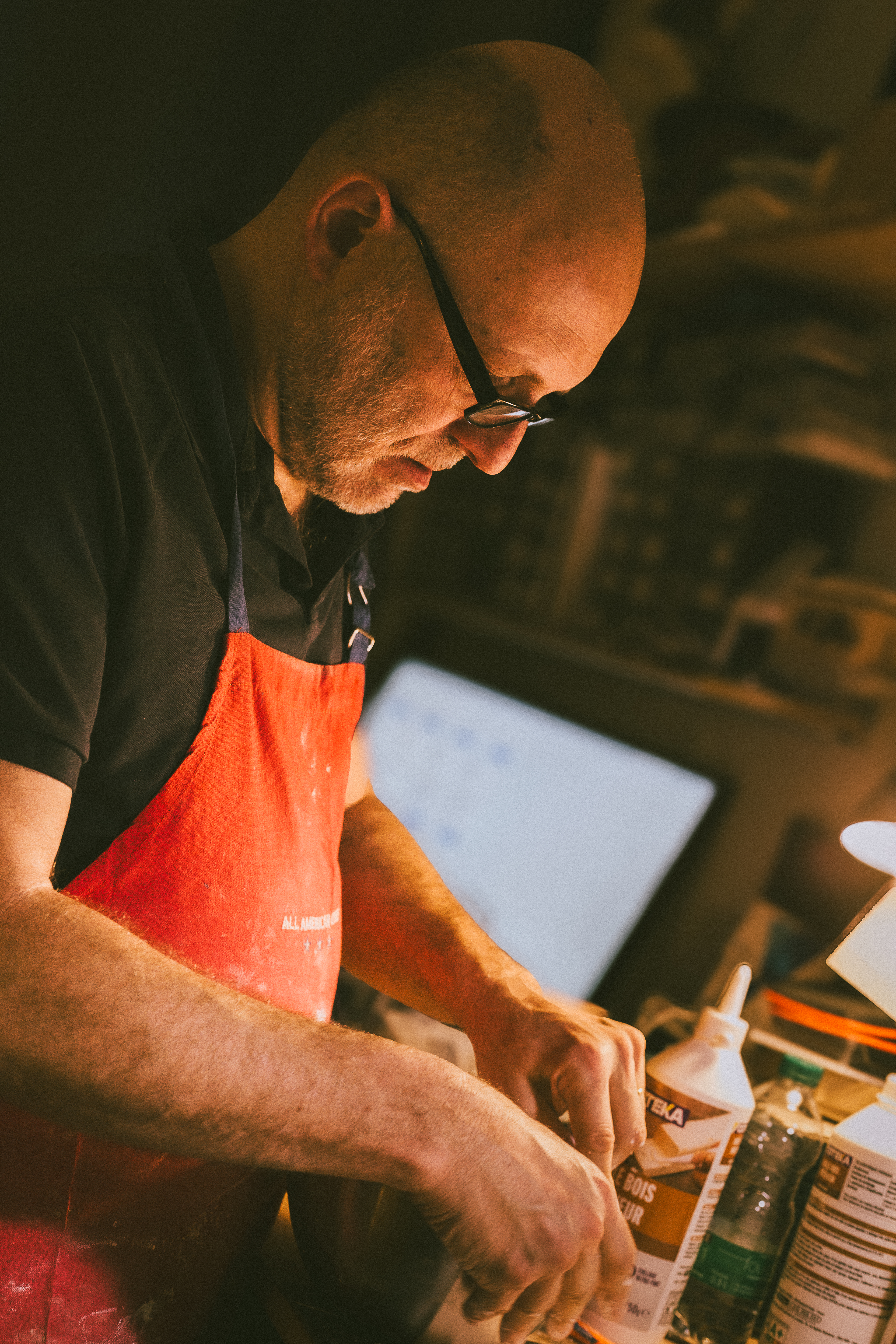
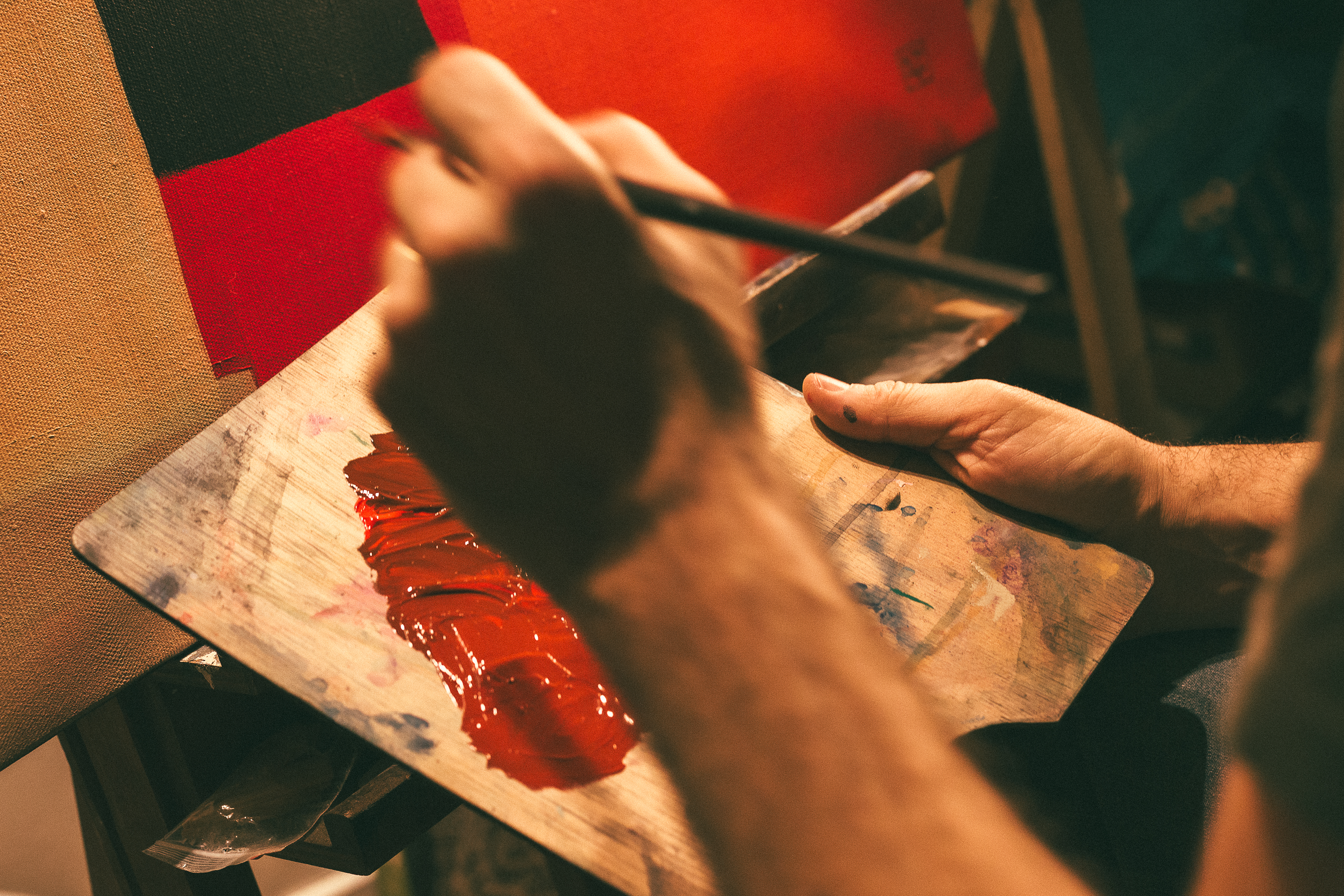
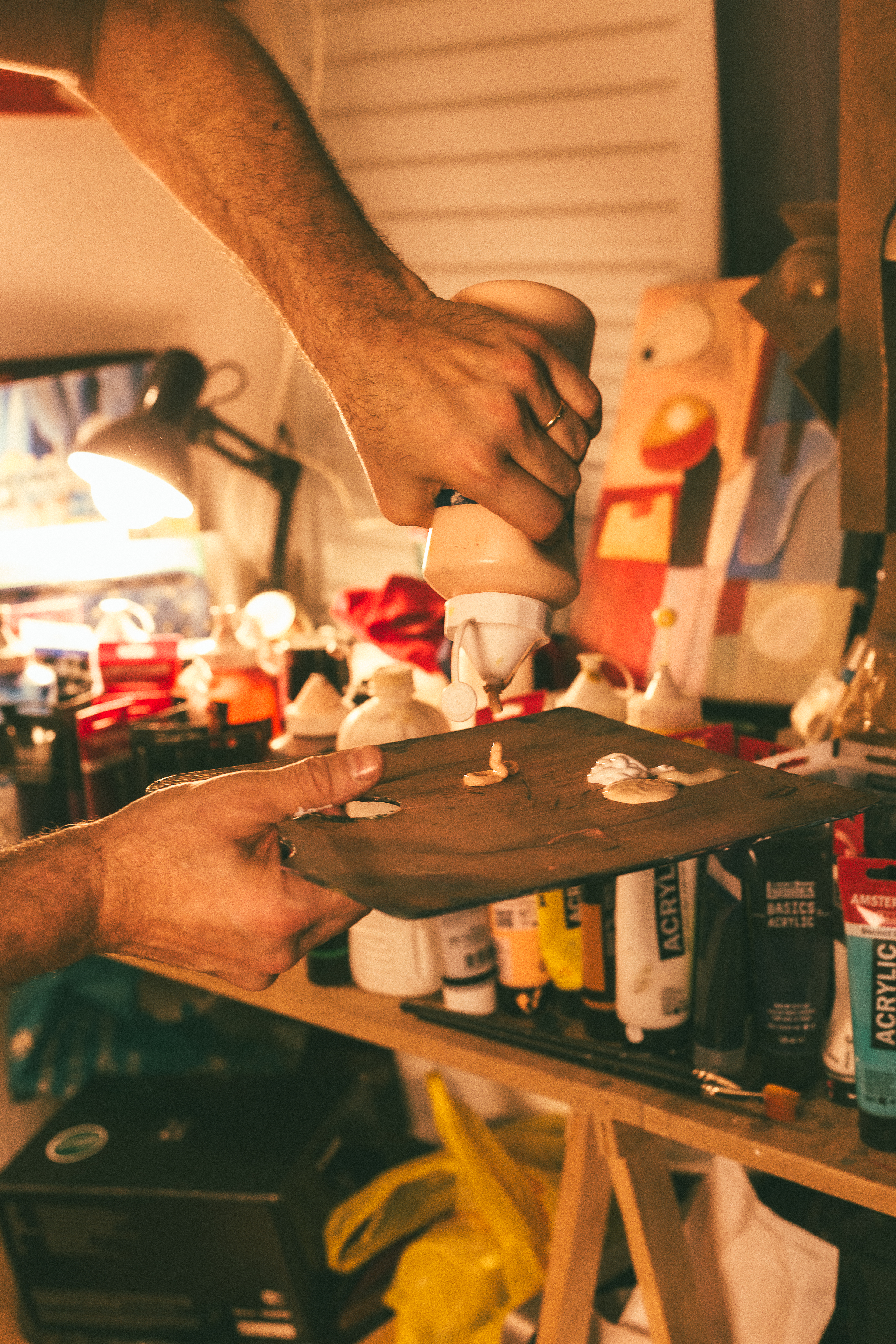
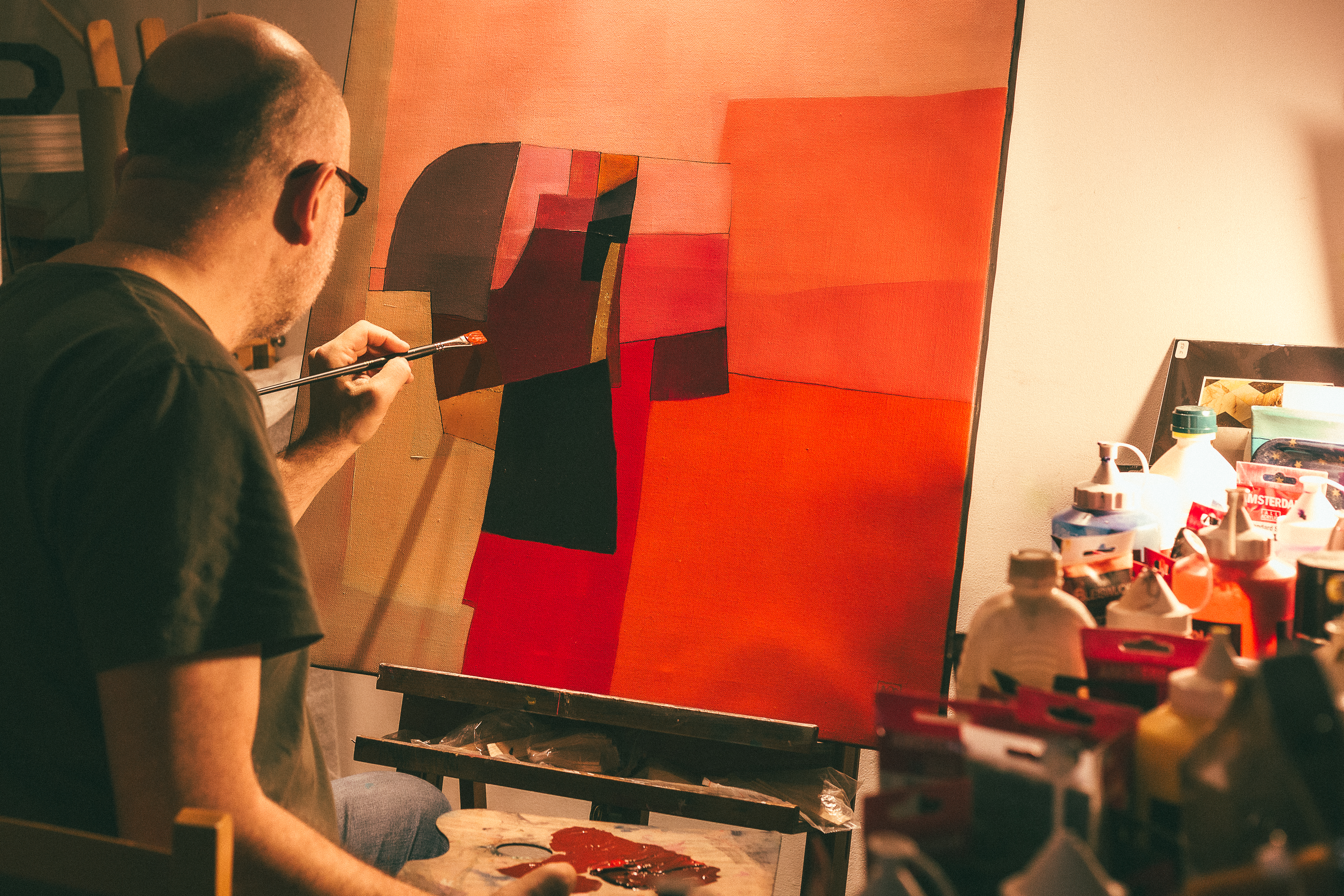
— On February 18, photographer Enora Jourdin documents a day in his Paris studio.
— On May 17, the Seine-Port Contemporary Art Market; on May 24, La Nuit des Artistes, Saint-Germain-en-Laye; on June 14, the 17th Saint-Germain-en-Laye Art Market.
— On May 30, forms AQA Publishing LLC in the State of New York.
— In July, founds Art Quam Anima in Paris.
— Two Elements Jazz evenings at the Nonsense, Montmartre.
— On December 26, takes part in the Métamorphose 2025–2026 salon.
2026
— On January 31, opens Art Quam Anima, a gallery-studio at 28 rue du Dragon, Saint-Germain-des-Prés, Paris. The inaugural exhibition brings together six chromatic canvases and six ceramic and steel sculptures.
— In February, publishes the Manifesto Ideamorphiste in Art Quam Anima Papers.
— From March 9 to May 30, Through the Aperture — Research on Harmony, twenty-four paintings transposing Western tonal chords into colour.
— In March, publishes The 31 Propositions of Ideamorphism and The Prescribed and the Realized — A Measurement Device for a Chromatic Codex.
— In April and May, two editions of the Symposium du Dragon, philosophical gatherings at the gallery.
— On May 30, opens Solabi Vare, a permanent living exhibition of ephemeral sand bas-reliefs with no closing date. The Elements Jazz quartet performs at the opening.
— In July, publishes the Seven Propositions, superseding the thirty-one.
— Formalises the Codex of the Feigned Tongue, version 1.0.